Welcome to a blog dedicated to enthusiasts of the colorful and exciting world of Betty La Fea. Philippine's "I Love Betty La Fea" soap opera is based on the Columbian telenovela ,Yo soy Betty, la fea, that has spawned over 20 editions worldwide. This website has been established to offer a portal connection for fans of any Betty La Fea adaptations around the globe. The Betty La Fea saga is not just a franchise but a universal organization for everybody to share their country's culture and sensibilities.

I ♥ Betty La Fea Updates

When do you wish "I Love Betty La Fea" series to end?

Showing posts with label Yo Soy Betty la Fea. Show all posts

Wednesday, November 19, 2008

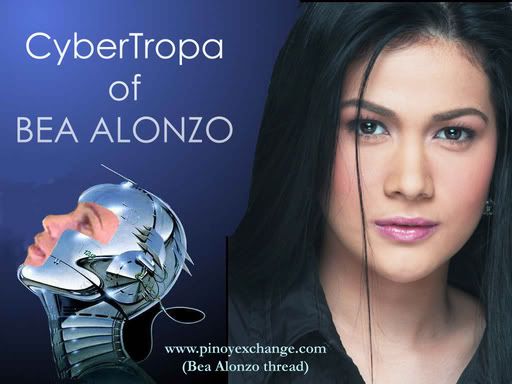
Betty La Fea Finally Meets the Beautiful Bea Alonzo


There was an episode before in I Love Betty La Fea where Betty was eager to see the 4G endorser Bea Alonzo in person but Hugo didn't permit Betty to go with him to the commercial shooting. Well, not so soon, Betty's dream to meet Bea Alonzo herself finally came true. However that rare encounter never happened in the actual series, as it was just a VTR Promo for 4G antioxidant product shown in ASAP '08, originally known as simply A.S.A.P. (All-Star Sunday Afternoon Party) is a Philippine noontime variety show aired every Sunday.

 
Here are the other trivia happened in International "Betty La Fea" of the actors who portrayed themselves, have multiple roles in the series, or have crossed over with other Bettys.

 
  • Mario Duarte (Nicolás Mora) portrayed himself in an episode in Yo soy Betty, la fea
  • In La fea más bella, Sergio Mayer (Luigi Lombardi) portrayed himself in a couple episodes that took place at a performance of "Solo Para Mujeres," a live stage show featuring male celebrities dancing like the men of Chippendales. Eduardo Rodrigues, who would later appear as Galo Rivera in some of the "Vidas de Fuego" scenes on "Ugly Betty," and who would also appear in an episode of LFMB as Aurora's boyfriend Lalo, was a member of the "Solo Para Mujeres" troupe.  
  • Angélica Vale appeared in the first-season finale of "Ugly Betty" as a character named Angélica, who looked exactly like the pre-makeover Lety. In the episode, Betty had to visit her orthodontist's office, where Angélica worked as a dental assistant.
  • In one episode of La fea más bella, Mariana Seoane not only played her character, Carla Santibañez, but she also appear of ed as herself, singing at an event to celebrate the launch of Aldo's gastronomic tourism idea. During Seoane's performance, Carla makes some slightly disparaging remarks about the singer's style to Fernando, then Omar mentions to Fernando that Mariana and Carla look exactly the same.
  •   "Ugly Betty" producer Salma Hayek appears as a maid on the telenovela that the Suarez family watches. Later became Sofia, a popular author of books that help to empower women and recruited Betty to join her company.

  • In "Ugly Betty", Ruthie was the Assistant Editor of MYW magazine, working directly under the publication's Editor-in-Chief, Sofia Reyes. She's played by none other than Becki Newton, known also as Amanda, the Mode receptionist. Becki Newton (Amanda) also played Fey in some early 1980s flashback scenes and still photographs.
  • On July 10, 2008, Angeliki Daliani ("Maria, I Asximi"), Veerle Baetens ("Sara"), and Nyncke Beekhuyzen ("Lotte") appeared at Roma Fiction Fest to participate in a celebration of "Yo soy Betty, la fea" and all of its international incarnations. The event, entitled "Fenomenale Betty", took an in-depth look at the cultural impact of the show's various incarnations and their effect on pop culture worldwide. Fernando Gaitán, creator of the original telenovela also appeared, along with representatives of other versions, such as Marianna Cortes McAllister, who was responsible for adapting Spain's "Yo soy Bea", and Michael Esser, who wrote Germany's "Verliebt in Berlin".  To read details of the event, click here 


Trivia and Images courtesy of Tony Lagarto's International Bettybase


Monday, October 27, 2008

Desperately Seeking Susan: Ana Maria Orozco


While the Filipinos are enjoying the local version of Betty La Fea, the Columbians/Latinos are currently hooked with Latin American version of the U.S. television series "Desperate Housewives. The cast is headed by Colombia's Ana Maria Orozco, who is famous for playing Beatriz Pinzon (aka Betty) in the popular Colombian soap opera "Betty, la fea" (Ugly Betty) and now returns to this genre to play the role of Susana Martinez, popularized by Teri Hatcher in US version.

It is a program for adults about the lives of several Colombians in Argentina and, like the U.S. series on which it is based, focuses on the female characters. In the Buenos Aires neighborhood of Manzanares, Alicia will become friends with the other neighborhood wives - played by Argentine-Colombian Geraldine Zivic, Argentina's Lorena Meritano, Ecuador's Marisol Romero, Venezuela's Ruddy Rodriguez and Orozco. Alicia dies, but her spirit continues on to narrate the happenings in the lives of her friends.


Julián Arango, who originally played Hugo Lombardi in Yo Soy Betty La Fea, is also part of the cast as Tomás Salgari, the Doug Savant character (Tom Scavo). Ana María Orozco and Julián Arango were married before and they went through a divorce during the run of Betty series. Perhaps some of their real-life animosity helped to make that of their characters seem more authentic.

"Amas de casa desesperadas" debuted on 21 May 2007 on Teleamazonas and on 1 October 2007 on RCN TV.


 Photo Album Amas de casa desesperadas Promo Video


Thursday, September 11, 2008

Relive the original Yo Soy Betty La Fea that started the phenomenon


Catch the all new Laugh-Out-Lunch beginning September 15 with the comeback of the Columbia's Yo soy Betty La Fea in Studio 23. Relive the story of the original Betty La Fea that started the phenomenon that now has a dozen versions of this telenovela have been remaked in other countries including the Philippine's version "I Love Betty La Fea". Discover out how Betty survives in the world of fashion despite being the oversized square peg in the petite round hole. Watch it every Monday to Wednesday, 1:00-2:00 pm.


Monday, September 1, 2008

The Miss Ugly Betty Pageant 2008

If you just came out from your cave rock, this is the bettyful pageant recap for the year 2008!


  1. Legendary Queen of Bettyful: Columbia
    Betty: this is tweazer. Tweazer: this is Betty, now Pluck
  2. Worst Eyewear: Germany
    There must be something cooler at Das LensCrafters
  3. Most Stylish: Vietnam
    What's with the hat? Doing an Audrey Hepburn impersonation, eh?
  4. Blockbuster Princess: Israel
    Box Office Horror in Water: Jaws - Domestic Total Gross: $260,000,000
  5. Audrey Tauto-est: Netherlands
    Straighten the Hair, lose the glasses, and you try telling them apart
  6. Truth in Advertising: India
    Our eyes...our eyes!
  7. Truth in Advertising Runner-up: Mexico
    Way to be honest, Mexico!
  8. Most overexposed: America (as in America Ferrera)
    The girl is everywhere
  9. Miss Congeniality: The Philippines!
    With her child like chuckle in her laughter she wins a million hearts...ngork ngork ngork!
Image: Scanned and Modified from Entertainment Weekly (Stack, 2006)


Tuesday, August 19, 2008

Seperated at Birth: Lynda Carter "Wonder Woman" and Ana Maria Orozco "Betty La Fea"


I don't know how Ana Maria Orozco (the original Betty), would look like fighting in a super hero flick and wearing red white and blue skimpy clothes, but whenever I see her transformation in Yo soy Betty, la fea, I think that this should be how different Wonder Woman should be from her alter ego Diana Prince. She's gorgeous and would give such realism to both sides of the character. For once, it would make sense that people wouldn't recognize Diana when she'd turn into Wonder Woman.


Monday, August 18, 2008

Get to know the original Armando Mendoza in "Yo Soy Betty La Fea"


Contributed by: Faye Bettina
Source: fayebettina.multiply.com


In the original version of YO SOY BETTY LA FEA, Betty’s love interest was Armando Saenz Mendoza. He was the son of Roberto Mendoza and Margarita Saenz de Mendoza. His younger sister Camila lived permanently with her husband in Switzerland. Armando Mendoza was engaged with Marcela Valencia, a childhood sweetheart and co-owner of Eco Moda.

Eco Moda was a fashion design company owned by two families – the Mendozas and the Valencias, with Roberto Mendoza as the President/CEO. When Roberto retired, Armando replaced his father for the presidency. Well. It wasn’t an automatic replacement. The board members made their votes, of course. The other candidate for presidency was

(click read more below to continue)


Daniel Valencia, the brother of Marcela (Since their parents have already passed away and Marcela wasn’t interested in running the whole company. Marcela and Daniel’s sister, Maria Beatriz, wasn’t interested in the business. She was just busy spending her money for her own vanity.). Daniel was determined to get the presidency, but it was Armando who got the most votes – his mom’s, his best friend’s (Mario Calderon) and his fiance’s (Marcela) – while Daniel got only the vote of Roberto and Maria Beatriz.

Armando was the kind of man almost every girls dream of because of his looks and his status in society. However, he is the kind of man that would break every girl’s heart. He would easily make a girl, or a woman, fall for him by his looks, his moves and his sweet talking. But he would easily dump her for another. Most often, he would have relationships with several women at the same period of time. But, none of them was serious, except for Marcela.

However, aside from the models and female celebrities who gather around him like birds, the others were in so much fear of him. He was only charming with those beautiful and sexy ladies, but a monster in front of the ‘ordinary’ employees. His shout would make one start and tremble, especially when that person makes mistake or says something stupid. He was an arrogant and domineering boss… until he met Betty.

Well, he was arrogant and domineering with her at first. But, her efficiency, intelligence, diligence and loyalty made him change his attitude toward her. He respected her and even protected and defended her from his own girlfriend. He made some huge mistakes along the way, by using her and abusing her trust for his own self-interests. However, he learned his lesson from these mistakes. In the end, he had fallen deeply in love with Betty, and had changed into a better person – a lot better than who he used to be.

Armando Mendoza was portrayed by Jorge Enrique Abello. JEA is a versatile Colombian actor who had also made movies and soaps in other countries near Colombia. He has been recognized by award giving bodies. Among his telenovelas were the original version of “La Viuda de Blanco” (The Widow in white) 1996, as Dr. Dimas Pantoja, opposite Yolandita Monge as Haydée Blanco, Las Ejecutivas (The Executives) 1996, La Mujer en el Espejo (The Woman in the Mirror) 1997, Perro amor (Dog Love) 1998, and the leading man in the original version of Betty La Fea (Betty, the ugly) 1999, opposite leading lady Ana Maria Orozco, Julius 1999, Eco moda (Echo Fashion) 2001, La Costeña y el Cachaco (The woman from the coastline & the Cachaque man) (2003), Anita no te Rajes (Anita don't give up) 2004, opposite leading lady Ivonne Montero & Merlina, Mujer Divina" (2005-06)& En los tacones de Eva" (In Eva's heels) (2006). In this last soap, he won a best actor award.

Beside soap operas or telenovelas and movies, Jorge Enrique Abello is also a theatre actor, director and a UNICEF ambassador. He played Horacio in the 2005-2006 play “HAMLET”.

He’s also a very athletic person who enjoys scuba diving and horse-backridng. His fascinations are books, artworks, dogs and religion (especially Hinduism and Buddhism). He was very imaginative and creative ever since he was a kid.

JEA was born on February 28, 1968 in Bogota, Colombia; divorced to Marcela Salazar,
and a doting father to a beautiful 8-year-old Candida (Candy). The last thing I know of him is that he’s been dating Colombian model and actress, Natalia Jerez.

In the Philippine version, Armando Mendoza is Armando Solis portrayed by the Philippine Blockbuster King, John Lloyd Cruz. Notice their similiraties in looks?


Image: Tony's International Bettybase


Wednesday, July 16, 2008

Lust in Translation

By Kristen Baldwin
Source: EW.com

The story of an ugly woman's rise to power undermines a cherished American stereotype, says Kristen Baldwin

If there's one thing you don't see a lot of on series television, it's ugly people -- especially ugly women. After wracking my brain, the only recent example I could come up with of a TV series that starred a woman who was unattractive by Hollywood standards was ''Roseanne,'' and that's primarily because Roseanne committed what's seen as the biggest celebrity sin -- being overweight.
That's why it's so entertaining to watch ''Yo Soy Betty La Fea'' (''I Am Betty the Ugly Girl''), an edgy Colombian soap opera that airs in the U.S. on Telemundo weeknights at 8 p.m. It's the story of Betty Pinzon, a brilliant 26 year old whose university degrees are overshadowed by her innumerable beauty flaws, including a mouthful of braces, greasy bangs, and a wardrobe consisting of frumpy, librarian worthy outfits. (The comical irony of ''Betty La Fea'' is that the lead actress, Ana Maria Orozco, is actually a ridiculously beautiful model who's been uglied up with big glasses, fake braces, etc.)

(click read more below to continue)


It doesn't matter that I barely understand Spanish -- I catch only about every 10th word. In fact, much of the fun of watching ''Betty La Fea'' as an English only speaker is deciphering the most basic of plot points armed only with junior high school Spanish skills. (Plus, the Web is filled with ''Betty'' fan sites, some of which have English language episode summaries. Try Telenovelas Forum for starters.

Even though she's spent her whole life being shunned for her looks (the opening credits show a hospital nurse reacting with horror to newborn baby Betty), La Fea takes a job at the hip fashion house Eco Moda, where she can't come close to fitting in. On her first day, the Eco Moda security guard won't let her into the building, because he doesn't believe such an ugly girl works with models and chic designers. Once there, she falls in love with her handsome jerk of a boss, Armando, and endures endless taunts and humiliations as the office's most unattractive employee.
Over the course of the 18 month long telenovela, however, Betty gets involved in, and then exposes, a fraudulent deal with Armando on behalf of Eco Moda, and now, through a series of complicated plot twists I don't really understand, she's become the company's president -- much to the horror of the fashionable staffers. It doesn't matter to them that Betty has recently undergone a makeover; gone are the bad bangs, the oversized glasses, and the ugly clothes (although much of the Colombian viewing audience felt betrayed by ''La Fea'''s transformation).
Indeed, having a show that features an ugly female lead -- especially in a culture where women are judged primarily on their looks -- is a revolutionary thing, and it's a bit disappointing that she ultimately conforms to society's standards of beauty. But it's really no surprise that ''Betty'' creator Fernando Gaitan made over his homely heroine, because soap operas are, above all else, about fantasy fulfillment.
Never mind the beauty battle: ''Betty La Fea'' is still a fascinating and funny nighttime soap. Don't let the language barrier scare you; the ''Friends'' watched telenovelas for fun (remember, waaay back in season one?) And even Julia Roberts' character in ''The Mexican'' is a fan. Clearly, they're onto something


Tuesday, July 8, 2008

Fernando Gaitán: Creator of Yo soy Betty, la fea

Source: worldscreen.com

ABC’s decision to place the series Ugly Betty in its prime-time schedule during the fall at 8:00 p.m. on Thursday night was a risky one. Ugly Betty is based on the Colombian telenovela Yo soy Betty, la fea. And while Betty was a mega hit across Latin America and local adaptations have delivered high ratings in countries as diverse as Germany, India and Spain, the telenovela genre had yet to prove itself with the American audience.

But ABC was taking a well-calculated risk. Not only had the concept behind Betty—an unattractive girl who uses her considerable brains to reach success in the business world—resonated with viewers from various cultures, but the U.S. show came with some very important talent attached. Salma Hayek serves as executive producer as does Ben Silverman, whose production company Reveille has successfully adapted the BBC hit The Office for NBC.

As it turns out, Ugly Betty emerged as the highest-rated new show in the U.S. network fall season that began in September.

No one has been more surprised by the success Betty has enjoyed around the world than the creator of the original telenovela, Fernando Gaitán.

(click read more below to continue)


He created Yo soy Betty, la fea for the Colombian broadcaster RCN. “No one ever thought that Betty would be such a hit, because from the beginning we thought of it as an experiment,” says Gaitán. “We made Betty with trepidation and without great ambitions, because it contained a number of unconventional elements for a novela.” In fact, this was the first telenovela in which the female lead was not a beautiful woman. In addition, contrary to traditional novelas, the first kiss took place only midway through the novela, and not at the beginning, and the male lead was wicked and immoral. “We had no reason to believe this would be a hit, rather, we wondered whether it would work at all,” says Gaitán.

As Gaitán explains, he got the idea for Betty while he was working at RCN. “The station consists of two different worlds; the first is the home of the stars, of divas, beautiful actresses, presenters, models and the most handsome men,” he says. “It’s a glamorous world. The other is more conventional and ordinary—the world of secretaries and messengers. I was always intrigued by that group of secretaries and how they gazed at the other women with a certain fascination, and even with ferociousness.”

It was then that Gaitán started to explore the world of these secretaries, who were basically outcasts, and they became the focal point of Yo soy Betty, la fea—in particular at a time when society was so obsessed with cosmetic surgery. “I can say that in Colombia there are no ugly women, except for those married to poor husbands,” he quips.

Even before creating Betty, Gaitán had already made a name for himself on the small screen when he wrote Café con aroma de mujer, which was the first Colombian telenovela to gain international notoriety and success. He had already been writing comedies, which not only allowed him to earn a living, but in the process, to create a form of high-quality television that was akin to feature films.

Gaitán’s resumé includes the teen novela Francisco el matematico, and more recently Hasta que la plata nos separe, a new novela now airing on RCN and that the broadcaster is also selling internationally.

“There are three characteristics that define my work,” says Gaitán. “The first is investigating, which is due to my background as a journalist. The second is comedy, which I really like, and third I am intrigued by the mix of comedy and drama.”

Latin American telenovelas must adhere to a strict production schedule in order to churn out 100-plus episodes and a plot that incorporates a beginning, a middle and an end. In order to enable this type of production, Gaitán typically lays out the whole story line of the novela and writes scripts in groups of five or ten episodes well before they go to air. This allows him the flexibility to make changes as necessary as the novela progresses. “I follow the telenovela very closely and I control production,” he says. “This ability to manipulate a novela is part of the genre’s essence—even though the general story line is already set.”

While telenovelas in Latin America are stripped across schedules five days a week, the American Ugly Betty on ABC airs once a week. And as Gaitán notes, “I believe this will be the most interesting of all the Betty adaptations that have been produced around the world—to see if Latin vision and flair can be accepted and become part of the North American world.”


Friday, July 4, 2008

The ugly truth about "Betty La Fea"

A telenovela heroine for our times betrays her feminist fans.
- - - - - - - - - - - -
By Sandra Hernandez
Source: Salon.com

More than 80 million people in the United States and Latin America tuned in to "Betty La Fea," the telenovela in which an ugly woman navigates a world where beauty is generally all that matters.

(Image courtesy of UglyBettyNews.com)


High-profile Spanish-language columnists, politicians and pundits touted the show's feminist message, a rarity in the formulaic world of telenovelas. Respectable publications such as Colombia's leading daily, El Tiempo, dedicated entire columns to the soap's heroine, Betty, an unattractive but brilliant economist.

Betty message boards buzzed with e-mails from fans eager to discuss the previous night's episode. Even newspapers in the United States, which generally ignore Spanish-language television, reported on the "Betty" phenomenon as it captured record television ratings in the countries, including the U.S., where it had its finale in May.

Why, then, did this groundbreaking cultural event end with angry words from critics and widespread hostility from fans? Simple. It reverted to type and dashed the hopes of those who had watched it with a giddy sense of a revolution.

When Betty began airing last August on the Telemundo network, I tuned in wondering just how big a risk a telenovela would take. The soap was already generating buzz in Latin America, where critics were raving about the show's social message: Beauty is only skin-deep.


(click read more below to continue)


Like their English-language counterparts, Spanish-language filmmakers and advertisers had begun to learn that women are so eager to see realistic portrayals of themselves in the media that they are willing to throw their support behind any show that promises even the slightest hint of reality.

Telenovelas, however, have stubbornly maintained a traditional view of women's aspirations, one that equates female success with being beautiful and married. While there have been a few exceptions, most recently the Mexican telenovela "Mirada de Mujer," which told the story of a middle-aged woman who confronts life on her own after discovering her husband is having an affair, soaps have mostly remained faithful to a single plot involving a beautiful ingénue's search for love.

It was against this backdrop that Betty the Ugly One began.

It was clear from the beginning that the show's creators understood how to get attention. In a world where heroines tend to look like Salma Hayek and Jennifer Lopez, they created an antiheroine who lacked the kind of stunning looks and physical attributes that cause men to propose marriage after just one meeting. With her thick glasses, braces and unibrow, Betty wasn't much to look at, by Latin standards. Her poor sense of style, squeaky voice and intelligence only made her plight that much more desperate.

And just in case viewers weren't convinced of the burden of her ugliness, the show's creators put Betty to work in a fashion designer's "house" and made her love interest a man who was breast-fed on beauty. Betty's Romeo was the owner's son -- a guy who had grown up thinking the average woman wore a size 2.

The premise was stunning: a woman whose appeal is her intelligence, humanity and humor struggles to be seen, heard and, ultimately, adored.

The show drew even hardened skeptics like me who believe telenovelas are made for housewives, retirees and recent immigrants whose language constraints force them to watch bad television.

I had watched a few soaps while growing up. My mother watched them religiously and through her viewing habits I came to know the formulaic plotline that usually involved a poor but beautiful girl falling for a rich guy whose family wasn't about to put up with their love affair. I came to regard telenovelas as the cinematic equivalent of Harlequin romances. They offered a kind of fuzzy, airbrushed image of love and life that lacked any realistic wrinkles or messy details

Read the rest of this article »


Tuesday, July 1, 2008

The Phenomenon of Yo Soy Betty la Fea

Source: ZonaLatina.com


The telenovela Yo soy Betty la Fea is the story of Beatriz Pinzón Solano, a well-educated, intelligent, idealistic and timid woman who was ugly looking. This telenovela was produced by the RCN network in Colombia, became a phenomenal hit and was exported successfully to many other countries in the world. The chart below shows the ratings in achieved by the Yo Soy Betty la Fea in four Latin American countries during the month of March in 2001.


Why was this telenovela so popular? Yo Soy Betty La Fea was produced by the new Colombian network RCN. Colombia is a country in which cocaine has played and still plays a major role in national development. Corruption is endemic among elected officials. Violence is perpetrated by various armed groups against each other and, quite often, against the citizenry. In this context, Betty comes through as a symbol of the uncorrupted innocence of Colombia.

(click read more below to continue)


Outside of Colombia, the popularity of Yo Soy Betty La Fea has been speculated to due to a number of reasons. For one thing, people are used to seeing telenovela characters played by stars such as Thalia. That is nice, except not many people in real life looks like Thalia. In the end, these other telenovelas are just fantasies. They are diverting, but less than totally satisfying. Along comes Yo Soy Betty La Fea, with a female lead who definitely must be said to look ugly.

Apart from the look of the female lead character, Yo Soy Betty La Fea is also peppered with other doses of realism. The daily interactions of the characters involve all the little indignities of social, economic, racial, educational and gender inequalities.


At the beginning of the series, Betty got a job at a major fashion design company. Although she was educated as an economist, she could only obtain a job as a secretary. Towards the end of the series, Betty underwent a transformation --- the braces were gone, the thick glasses were replaced by wire frames and the hair was restyled. This was obviously pre-planned since the actress Ana María Orozco was not cast because she looked like the perfect Betty, because she was a beautiful woman who then had to go through hours of preparation each day for her role. Betty also moved up the corporate ladder to become an executive. Worst yet, Betty married her boss, who was shown throughout as being mean-spirited, insincere, unfaithful and therefore quite undeserving. The prince that Cinderella got was in truth a despicable frog. To some, therefore, this was not a 'fairy tale' ending but a total sell-out.


Yo Soy Betty La Fea was obviously a money-generating machine for its producers. Nevertheless, the story had to reach its end since the cast had been working without pause for eighteen months. A sequel is being planned, although there are no details. In the case of the USA, Betty La Fea appeared on the Telemundo network and was largely responsible for bringing up its ratings. The rights to the sequel have already been given to its rival, the Univision network.


As business cynics, we suggest that the plotline of the sequel might be this: Betty contemplates the ugliness of the reality of her marriage and career, and makes some important and surprising personal decisions. That should resonate with the chords of quite a few hearts out there ...


It’s said about me (SE DICE DE MI)

It’s said about me (SE DICE DE MI)
Yo Soy Betty La Fea - Intro (original)


SE DICE DE MI - Original
Se dice de mi,
Se dice de mi,
Se dice que soy fiera,
que camino a lo malevo,
que soy chueca y que me muevo
con un aire compadrón,
que parezco Leguisamo,
mi nariz es puntiaguda,
la figura no me ayuda
y mi boca es un buzón.

Si charlo con Luis, con Pedro o con Juan,
hablando de mi los hombres están.
Critican si ya, la línea perdí,
se fijan si voy, si vengo o si fui.

Se dicen muchas cosas,
mas si el bulto no interesa,
porque pierden la cabeza
ocupándose de mi.
Yo se que muchos que desprecian con mentiras
y suspiran y se mueren cuando piensan en mi amor.
Y mas de uno se derrite si suspiro
y se quedan si los miro resoplando como un Ford.

Si fea soy,
pongámosle,
que de eso aun no me entere,
en el amor, yo solo se,
que a mas de un gil, deje de a pie.

Podrán decir, podrán hablar,
y murmurar, y rebuznar,
mas la fealdad que dios me dio,
mucha mujer me la envidio
y no dirán que me engrupi
porque modesta siempre fui.
Yo soy así

Y ocultan de mi,
ocultan que yo tengo,
unos ojos sonadores,
además otros primores
que producen sensación.
Si soy fiera se que en cambio,
tengo un cutis de muñeca,
los que dicen que soy chueca,
no me han visto en camisón.
Los hombres de mi. critican la voz,
el modo de andar, la pinta, ehe!, la tos.

Critican si ya la línea perdí,
se fijan si voy, si vengo, o si fui.
Se dicen muchas cosas,
mas si el bulto no interesa,
porque pierden la cabeza
ocupándose de mi.

Yo se que hay muchos me desprecian compañía,
y suspiran y se mueren cuando piensan en mi amor.
Y mas de uno se derrite si suspiro
y se quedan si los miro resoplando como un gol.

Si fea soy,
pongámosle,
que de eso aun no me entere,
en el amor, yo solo se,
que a mas de un gil, deje de a pie.

Podrán decir, podrán hablar,
y murmurar, y rebuznar,
mas la fealdad que dios me dio,
mucha mujer me la envidio,
y no dirán que me engrupi
porque modesta siempre fui.
Yo soy así

It’s said about me - English
It's said about me
It's said about me,
Its' said that I'm ugly,
that I walk like a quarrelsome person,
that I'm bowlegged and that I move
with a conceited attitude,
that I look like (jockey Ireneo) Leguisamo,
my nose is pointy,
the silhouette doesn't help
and my mouth is like a mail box.

If I chat with Luis, with Pedro or with Juan,
the men are talking about me.
They criticize if I already my waistline is gone,
they check if I go, if I come or if I left.

Many things are said
but the shape doesn't matter,
because they lose their head
concerning themselves about me.
I know that many snub with lies
and sigh for me and die when they think of my love.
And more than one melts if I sigh
and if I look at them, they're puffing like a Ford.

If I'm ugly,
let's say it's so,
though I'm not aware of that,
when it comes to love, all I know,
that I left stranded more than one fool.

They might say, they might talk,
and gossip and bray,
but the ugliness that God gave me
many women envied it
and they won't say that I deceived myself
because I always was modest.
I am this way.

And they hush about me,
they hide that I have,
some dreamy eyes
besides other charms
that produce sensation.
If I'm ugly, I know that instead,
I have the skin of a doll,
those who say I'm bowlegged,
have not seen me in a nightgown.
The men criticize my voice,
the way I move, the appearance, ahem, the cough.

They criticize if I already my waistline is gone,
they check if I go, if I come or if I left.
Many things are said
but the shape doesn't matter,
because they lose their head
concerning themselves about me.

I know that many snub the company I keep
and sigh for me and die when they think of my love.
And more than one melts if I sigh
and if I look at them, they gasp like they score a goal .

If I'm ugly,
let's say it's so,
though I'm not aware of that,
when it comes to love, all I know,
that I left stranded more than one fool.

They might say, they might talk,
and gossip and bray,
but the ugliness that God gave me
many women envied it
and they won't say that I deceived myself
because I always was modest.
I am this way.

Source: planet-tango.com


Digg! Digg!
Add to Technorati Favorites Technorati
Del.icio.us
Stumble
Facebook
More...

Enter your email address:

Delivered by FeedBurner

Subscribe to Feed

Subscribe to Podcast


Entertainment & Lifestyle - Top Blogs Philippines